Dead Ends and Dividends: What Street Layout Reveals About Long-Term Property Value
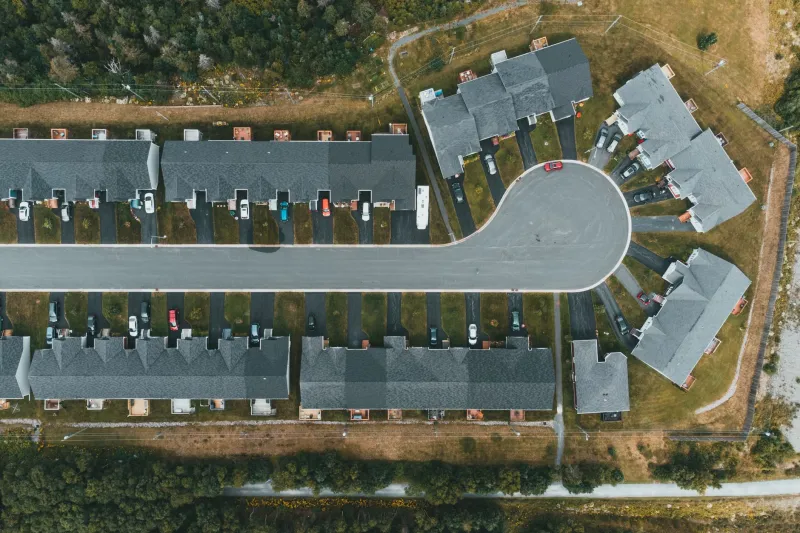
When prospective buyers evaluate a home, they scrutinize square footage, school ratings, and kitchen finishes. What rarely appears on their checklist is the street itself — specifically, whether that street connects to others or quietly terminates in a circular turnaround. That distinction, it turns out, carries measurable consequences for property values, community character, and long-term investment performance.
At Century 21 Atlas, our agents regularly navigate conversations about neighborhood infrastructure that buyers seldom initiate on their own. Street layout is one of the most underappreciated variables in residential real estate analysis, and the data behind it is more nuanced than conventional wisdom suggests.
A Brief History of How American Streets Were Designed
The cul-de-sac is not an accident of geography. It is a deliberate planning philosophy that gained mainstream traction in post-World War II America, when suburban development exploded and urban planners prioritized the separation of residential life from commercial traffic. Influenced by the British "Radburn" planning model of the late 1920s, developers across the Sun Belt, Midwest, and Mid-Atlantic embraced the dead-end street as a symbol of quiet domesticity and child safety.
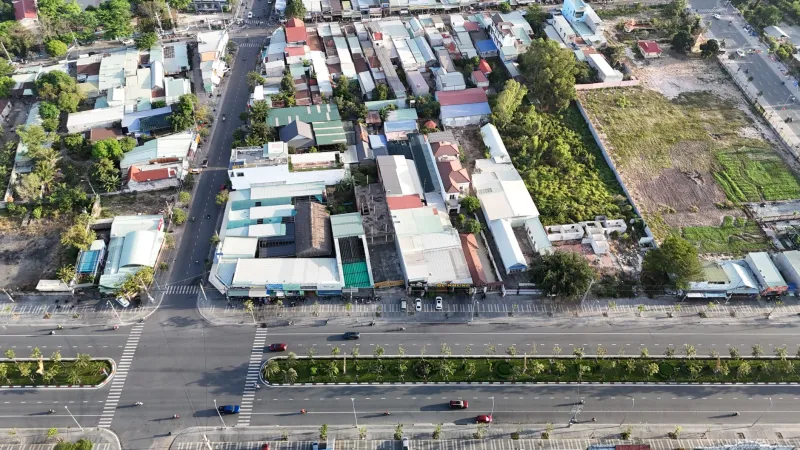
Grid-pattern streets, by contrast, trace their lineage to older American cities — Chicago, Philadelphia, Portland — where walkability and commerce were woven into the same fabric. The grid maximizes connectivity, distributing traffic across multiple routes and supporting mixed-use development at nearly every corner.
These two philosophies now coexist across American metros, and their long-term market implications diverge in ways that reward careful analysis.
The Cul-de-Sac Premium — and Its Limits
Research from planning institutions and real estate economists has consistently found that homes situated on cul-de-sacs command a price premium over comparable homes on through-streets. Estimates typically range from three to six percent, though premiums as high as ten percent have been documented in family-oriented suburban markets. The rationale is intuitive: reduced traffic volume, enhanced perceived safety for children, and a sense of community among the small cluster of households that share the space.
However, that premium is not unconditional. Several moderating factors deserve attention:
Resale velocity can be slower. Cul-de-sac homes attract a narrower buyer profile — predominantly families with children or buyers prioritizing quiet over convenience. Buyers who commute on foot, rely on public transit, or prioritize walkability often view dead-end streets as liabilities. In markets where walkability scores carry significant weight, such as urban-adjacent neighborhoods in Seattle, Denver, or the Washington D.C. metro area, the cul-de-sac premium shrinks or disappears entirely.
Emergency response times are a measurable variable. Studies examining fire department response data have found that street connectivity correlates with faster emergency access. Cul-de-sacs and looping street networks with limited ingress points can add minutes to response times, a factor that some insurance carriers have begun incorporating into homeowners' premium calculations. Buyers in areas with limited street connectivity may encounter marginally higher property insurance costs, particularly in regions already subject to wildfire or flood risk.
Long-term appreciation trends are context-dependent. In suburbs built predominantly between 1960 and 1990, cul-de-sac neighborhoods can show appreciation rates that track closely with surrounding markets. But as demographic preferences shift toward walkable, mixed-use environments — a trend documented extensively in millennial and Gen Z buyer surveys — grid-connected neighborhoods in transitional urban areas have demonstrated stronger appreciation in many metros.
Grid Streets and the Walkability Dividend
The grid-pattern street network has experienced a significant reputational rehabilitation over the past two decades. Urban planners, public health researchers, and economists have collectively reexamined the automobile-centric assumptions that made the cul-de-sac so appealing to mid-century developers.
Walk Score data, which quantifies pedestrian access to amenities, consistently shows higher scores in grid-connected neighborhoods. A 2019 analysis by real estate research firm Redfin found that each additional Walk Score point corresponded to a home value increase of approximately $3,000 in high-demand urban markets. That relationship is not universal — rural and exurban markets show minimal walkability premiums — but in competitive metros, the compounding effect is substantial.
Grid neighborhoods also tend to support stronger retail ecosystems. When foot traffic is distributed across connected streets rather than funneled through arterial roads, small businesses find more viable locations. That commercial vitality, in turn, supports neighborhood desirability and long-term tax base stability — factors that quietly underpin residential property values.
Community Cohesion: What the Research Actually Shows
One of the most frequently cited arguments in favor of cul-de-sacs is their tendency to foster tight-knit neighborhood communities. The logic holds that shared space, reduced through-traffic, and physical enclosure encourage neighbor interaction. Some sociological research supports this: residents of cul-de-sacs do report higher rates of knowing their neighbors by name compared to residents of through-streets.
Yet urban sociologists offer an important counterpoint. While cul-de-sac residents may know their immediate cluster of neighbors well, those neighborhoods can exhibit lower levels of broader civic engagement — participation in community organizations, voter turnout in local elections, and integration with adjacent neighborhoods. Grid streets, by facilitating pedestrian movement and chance encounters across a wider area, may cultivate a different but arguably more resilient form of social capital.
For buyers weighing community character as a priority, the distinction matters. A cul-de-sac offers intimacy within a small group; a grid neighborhood offers connectivity across a larger one.
What Sellers Should Understand
For homeowners preparing to list, street layout is a contextual asset that requires careful positioning. A home on a cul-de-sac should be marketed with explicit emphasis on traffic volume data, lot configuration advantages (cul-de-sac lots often feature larger rear yards due to the pie-shaped geometry), and safety features. These attributes resonate strongly with a specific buyer segment and should be front-and-center in listing copy.
Conversely, sellers on grid streets in walkable neighborhoods should lean into connectivity metrics, transit proximity, and lifestyle convenience. Framing the street as an asset — rather than allowing buyers to perceive it as a source of noise or traffic — requires deliberate narrative construction.
In both cases, an experienced agent who understands local market preferences and can contextualize street layout within broader neighborhood dynamics is invaluable. Generic listing strategies rarely capture the nuanced value propositions that street configuration creates.
Reading the Map Before You Commit
The decision to purchase a home on a cul-de-sac versus a connected street is not simply a lifestyle preference — it is an investment thesis. Buyers who intend to hold a property for five to seven years in a family-oriented suburb may find the cul-de-sac premium well justified. Buyers seeking maximum liquidity, walkability, or appreciation potential in an urbanizing market may be better served by grid connectivity.
At Century 21 Atlas, we believe that every property decision deserves a full cartographic view — not just the four walls of the home, but the infrastructure, planning history, and market dynamics surrounding it. Street layout is one coordinate on that map. Understanding it clearly is part of finding your way to the right investment.