Locked In or Left Behind: How the Rate You Secured Determines the Wealth You Build

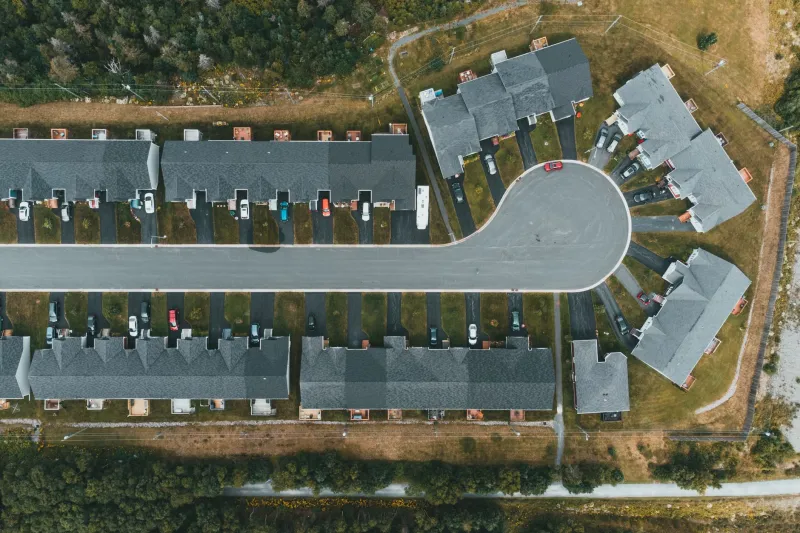
Imagine two neighbors. They bought homes on the same street, within eighteen months of each other, at nearly the same price. Their properties look similar from the curb, their square footage is comparable, and their down payments were roughly equal. Yet over the life of their loans, one of them will pay nearly $180,000 more in interest than the other. The only meaningful variable? The month they signed their mortgage documents.
This is not a hypothetical. It is the lived reality for millions of American homeowners whose financial trajectories were quietly set — sometimes irrevocably — by the rate environment that happened to exist during their transaction window.
How Mortgage Rates Actually Move Through Time
Mortgage rates are not static benchmarks. They respond to Federal Reserve policy decisions, inflation data, employment figures, bond market activity, and global economic events. Over the past three decades, the 30-year fixed mortgage rate has ranged from a historic low near 2.65 percent in January 2021 to peaks exceeding 7 percent in 2023, with substantial volatility in between.
Buyers who closed during the pandemic-era window of 2020 to early 2022 locked in rates that, historically speaking, may never be seen again in their lifetimes. Buyers who entered the market in late 2022 or 2023 often paid rates two to three times higher — not because they made worse financial decisions, but because the macroeconomic calendar simply did not favor them.
The compounding effect of this difference is staggering. On a $400,000 loan, the difference between a 3 percent rate and a 5.5 percent rate translates to roughly $560 more per month. Over 30 years, that gap accumulates to more than $200,000 in additional interest payments — money that, for the lower-rate borrower, remained available for investment, retirement contributions, or further real estate purchases.
The Refinancing Lifeline — and Its Limits
Refinancing is often presented as the solution to unfavorable rate timing, and in many cases it genuinely is. Homeowners who purchased at higher rates during the early 2000s, for example, had multiple opportunities to refinance into more favorable terms as rates declined through the 2010s. Those who acted decisively captured meaningful savings.
However, refinancing carries its own costs and conditions that limit its utility as a universal equalizer. Closing costs on a refinance typically range from 2 to 5 percent of the loan balance — on a $400,000 mortgage, that represents $8,000 to $20,000 in upfront expenses. The break-even timeline on those costs, calculated against monthly savings, often extends to two to four years. For homeowners who sell within that window, the refinance may actually cost them money rather than save it.
Additionally, refinancing requires sufficient home equity, a qualifying credit profile, and an income that satisfies current underwriting standards — none of which are guaranteed at any given point in a homeowner's life. Many borrowers who purchased at elevated rates in 2022 and 2023 are now monitoring rate movements carefully, but the question of when — and whether — rates will fall enough to justify the transaction costs remains genuinely uncertain.
The Wealth Divergence Nobody Talks About at Block Parties
The financial gap created by rate timing extends well beyond interest payments. Consider the equity-building dimension. At a 3 percent rate, a larger proportion of each monthly payment reduces principal from the very beginning of the loan. At 5.5 percent, a greater share of each payment services interest, meaning equity accumulates more slowly in the early years when appreciation gains are often most significant.
For buyers who purchased in 2020 and 2021, this dynamic created a compounding advantage: low rates accelerated equity accumulation precisely during a period of rapid home price appreciation. The result was a substantial and rapid increase in net worth that higher-rate buyers entering the same market in 2023 simply could not replicate, even if property values continued to rise.
This is the mechanism behind what economists sometimes call the "rate lock-in effect" — not merely the wealth implications for individual borrowers, but the broader market distortion created when millions of homeowners with 3 percent mortgages have little financial incentive to sell, constraining inventory and sustaining elevated prices for buyers who must finance at current rates.
What Buyers Can Do in a High-Rate Environment
Acknowledging the disadvantage of current rate conditions is not the same as accepting it passively. Several strategies can meaningfully reduce the long-term cost burden for buyers who cannot wait for rate cycles to shift.
Points and buydowns. Paying discount points at closing to permanently reduce the interest rate can make sense for buyers who plan to hold the property for an extended period. A careful break-even analysis — which any experienced agent or mortgage professional can help calculate — will determine whether the upfront cost justifies the long-term savings.
Adjustable-rate mortgages. For buyers with a defined time horizon of five to ten years, a 5/1 or 7/1 ARM may offer a lower initial rate than a 30-year fixed product. This strategy carries inherent risk if plans change, but for the right buyer profile it can reduce total interest paid substantially.
Accelerated principal payments. Even modest additional contributions to principal each month — an extra $200 to $500 — can shorten the effective loan term and reduce total interest costs considerably, partially offsetting the disadvantage of a higher rate.
Strategic timing. While no one can predict rate movements with certainty, monitoring Federal Reserve communications and economic indicators provides context for evaluating whether waiting several months might materially improve financing terms. A knowledgeable agent can help buyers weigh the cost of delay against the potential benefit of a lower rate.
The Atlas Perspective
At Century 21 Atlas, we recognize that the rate environment a buyer inherits is not a reflection of their financial sophistication or market savvy. It is, in large part, a function of timing — a variable that no individual controls. What buyers and sellers can control is the quality of their guidance, the rigor of their financial analysis, and the deliberateness of their decision-making.
Understanding how rate cycles create and destroy wealth is not an academic exercise. It is the foundation of a genuinely informed real estate strategy — one that accounts not just for what a home costs today, but what it will truly cost over the decades to come.