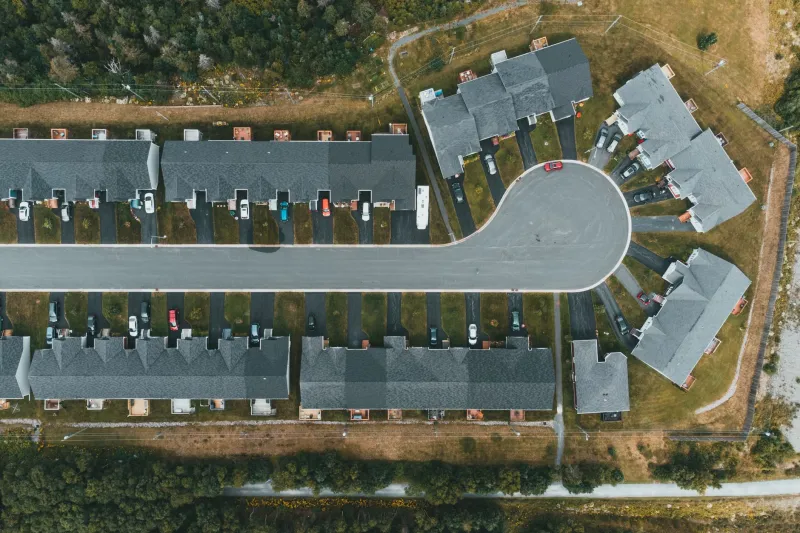
Streets That Sell: How the Cardinal Direction of Your Neighborhood's Layout Shapes Buyer Demand and Property Premiums

When buyers tour a new neighborhood, they typically focus on square footage, school ratings, and commute times. Rarely does anyone stop to ask which way the streets run. Yet urban planners, seasoned developers, and experienced real estate professionals understand that the cardinal orientation of a neighborhood's grid — whether its primary corridors run east-west or north-south — quietly governs sunlight patterns, pedestrian comfort, perceived safety, and, ultimately, what the market will pay.
At Century 21 Atlas, our role is to illuminate the structural forces that shape property values. This is one of the most underappreciated among them.
The Physics of Street Orientation
Sunlight is not a neutral variable in real estate. The direction streets run determines when and where natural light falls on front yards, stoops, sidewalks, and retail facades throughout the day. East-west oriented streets — those running horizontally across a map — place one side of the block in morning sun and the other in afternoon light. North-south streets, by contrast, distribute sunlight more evenly across both sides of the block as the sun arcs from east to west overhead.
For residential buyers, this distinction carries genuine financial weight. Homes on the south-facing side of an east-west street receive consistent sunlight across their front facades for most of the day, making them warmer in winter, more photogenic in listing photography, and generally more desirable to buyers who prioritize natural light. In colder climates — think the Upper Midwest, New England, and the Mountain West — south-facing frontage can reduce heating costs measurably and extend the usable outdoor season by weeks.
In Sun Belt markets, the calculus inverts. Phoenix, Dallas, and Miami buyers often prize north-facing frontage for its relief from intense afternoon heat, making north-south street layouts that place homes on east-west lots particularly attractive in warmer regions.
Walkability Perception and the Grid Effect
Beyond sunlight, street orientation shapes how walkable a neighborhood feels — not just functionally, but perceptually. Studies in urban design consistently find that pedestrians prefer walking on the shaded side of streets during warm months. Neighborhoods whose east-west blocks offer a shaded south-side sidewalk during summer afternoons tend to score higher on subjective walkability assessments, even when the raw Walk Score metric is identical to a comparable north-south grid.
This perception gap has measurable consequences. Neighborhoods that feel more walkable attract higher foot traffic to local retail, which in turn sustains the coffee shops, restaurants, and boutiques that buyers treat as lifestyle amenities. The directional layout of streets, therefore, creates a feedback loop: orientation influences comfort, comfort drives pedestrian activity, activity supports commercial vitality, and commercial vitality lifts residential values.
In cities like Chicago, Portland, and Washington, D.C. — all of which have well-defined historic grids — real estate professionals have long observed premium pricing on specific block faces that align with favorable sun exposure during peak pedestrian hours. These premiums are rarely advertised but are consistently reflected in closed sales data.
How Developers Engineer Desirability Through Directional Planning
Savvy developers do not leave street orientation to chance. In planned subdivisions and master-planned communities across the country — from the sprawling developments of suburban Houston to the mixed-use corridors of Northern Virginia — directional planning is a deliberate marketing and financial tool.
By orienting the primary entry boulevard to face east, a developer ensures that homebuyers approaching the community in the morning drive toward the rising sun, a subtle but psychologically powerful first impression. Interior streets are then arranged so that the most expensive lots — typically those on cul-de-sacs or backing to open space — receive the most favorable light exposure for their price tier.
In communities designed for active adult buyers, north-south street layouts are frequently preferred because they allow for more consistent shading of outdoor amenity spaces like walking trails and pool decks. In family-oriented developments, east-west grids that maximize afternoon sun on rear yards — where children play after school — are more common. These are not accidental decisions. They reflect decades of consumer research embedded in the planning process.
Neighborhood-Wide Appreciation Patterns
The aggregate effect of directional orientation on property appreciation is difficult to isolate precisely, because it interacts with dozens of other variables. However, market analysis in several major metros suggests that blocks with superior sun exposure — as determined by street orientation — appreciate at rates modestly but consistently above the neighborhood median over ten-to-fifteen-year periods.
The mechanism is straightforward: favorable orientation increases listing appeal, which expands the buyer pool, which sustains competition, which supports price growth. In markets where inventory is chronically tight, this structural advantage compounds over time.
For sellers, understanding their block's directional profile can inform listing timing. A home on a south-facing east-west block is best photographed and listed in late winter or early spring, when low sun angles flood the facade with warm light during midday hours. A home on a less favorably oriented block may benefit from twilight photography that de-emphasizes directional disadvantages.
What Buyers Should Ask Before Making an Offer
Buyers who understand directional dynamics can use them as a negotiating framework rather than simply absorbing their effects unknowingly. Before submitting an offer, it is worth asking:
- Which direction does the primary street run, and where does afternoon shade fall in summer?
- Does the rear yard receive usable sunlight during the hours the household is most likely to occupy it?
- How does the block's orientation affect the home's energy profile relative to comparable properties?
- Are there directional premiums embedded in the list price that can be objectively justified by sales data?
A knowledgeable Century 21 Atlas agent can pull block-level comparable sales data to determine whether a directional premium is already priced in — or whether an orientation advantage has been overlooked by the market, representing genuine value.
Mapping Your Next Move
The cardinal direction of a neighborhood's street grid is not a curiosity for urban planners alone. It is a quantifiable input into buyer psychology, pedestrian experience, energy economics, and long-term appreciation. Buyers who account for it make more informed decisions. Sellers who understand it position their listings more strategically. And developers who engineer it deliberately create communities that outperform their competitors in absorption rates and resale values.
At Century 21 Atlas, we believe that every data point on the map — including the direction the streets run — belongs in your property analysis. Contact one of our agents to learn how directional factors are influencing values in the specific neighborhoods you are considering.